Average Reviews:

(More customer reviews)Are you looking to buy Beats, Rhymes, and Classroom Life: Hip-Hop Pedagogy and the Politics of Identity? Here is the right place to find the great deals. we can offer discounts of up to 90% on Beats, Rhymes, and Classroom Life: Hip-Hop Pedagogy and the Politics of Identity. Check out the link below:
>> Click Here to See Compare Prices and Get the Best Offers
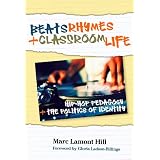
Beats, Rhymes, and Classroom Life: Hip-Hop Pedagogy and the Politics of Identity ReviewI would really like to like this book. I am having a lot of trouble doing so. It seems problematic that the author defines and appears to teach hip-hop as "authentic Black space" - isn't this essentializing - perhaps leaving out for example, Jamaican Americans and Latino Americans? So many of the examples provided seemed masculinist and essentializing, and yet the author refers to "otherness" so frequently that one would have higher hopes for his inquiry with students. As a reader and fellow educator, I had trouble with Professor Lamont Hill's rather heartless critique of his colleague (in hip-hop curriculum building) as someone who was "not an effective classroom teacher." Hill went on to divulge a story in which other teachers laughed at his idea of collaborating with this colleague, but for some reason Hill went forward with the project.I was then also curious as to why his collaborator was not a co-author. This would seem to warrant some explanation, particularly given that the author is an anthropologist. Hill goes on to posit this collaborator as a sort of Foucaultian "voyeur." What about the authors own voyeurism across cultures and genders - or while addressing topics he chose for this curriculum, such as abortion? As a female, I was especially troubled by the ways in which the author allows male students to speak for themselves via lengthy block quotes as disembodied authorial voices, while Hill himself gives female students fragmented voice along with somewhat objectifying descriptions of their person, their clothing, even their tattoos. There are gender and racial politics here that I wish were addressed more thoroughly.Beats, Rhymes, and Classroom Life: Hip-Hop Pedagogy and the Politics of Identity Overview''Hill's book is a beautifully written reminder that the achievement gaps that students experience may be more accurately characterized as cultural gaps--between them and their teachers (and the larger society). This is a book that helps us see the power and potential of pedagogy. It is not merely what Hill decides to teach that matters. It is also how he teaches it that connects with the students.''-- From the Foreword by Gloria Ladson-Billings, University of Wisconsin-Madison''Offering a complex representation of the history, uses, and modes of storytelling that has made hip-hop one of the most powerful markers of contemporary youth culture, Marc Lamont Hill has written a book that brilliantly engages all of the important issues about youth, memory, race, and education that are crucial to understanding and engaging hip-hop culture. This book is invaluable for anyone interested in hip-hop culture, identity, education, and youth.''-- Henry Giroux, author, The Abandoned Generation: Democracy Beyond the Culture of Fear, Global Television Network Chair in English and Cultural Studies, McMaster University, OntarioFor over a decade, educators have looked to capitalize on the appeal of hip-hop culture, sampling its language, techniques, and styles as a way of reaching out to students. But beyond a fashionable hipness, what does hip-hop have to offer our schools? In this revelatory new book, Marc Lamont Hill shows how a serious engagement with hip-hop culture can affect classroom life in extraordinary ways. Based on his experience teaching a hip-hop-centered English literature course in a Philadelphia high school, and drawing from a range of theories on youth culture, identity, and educational processes, Hill offers a compelling case for the power of hip-hop in the classroom. In addition to driving up attendance and test performance, Hill shows how hip-hop based educational settings enable students and teachers to renegotiate their classroom identities in complex, contradictory, and often unpredictable ways.Want to learn more information about Beats, Rhymes, and Classroom Life: Hip-Hop Pedagogy and the Politics of Identity?
>> Click Here to See All Customer Reviews & Ratings Now

0 comments:
Post a Comment